Play Trident of Legends Slot Game
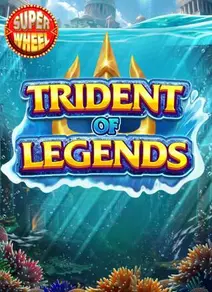
Trident of Legends Slot Game Review
Poseidon rarely shows up quietly, and in Trident of Legends by Stakelogic, the sea god brings a fully-loaded Scatter Pays system to online slots. Instead of traditional paylines, wins flow from clusters of 8+ matching symbols landing anywhere. And while the symbols tumble with a cascade, Poseidon occasionally spices things up with multiplier shells, free spins, or his own power moves.
Theme & Graphic
Everything in Trident of Legends keeps circling back to the ocean. The visuals play it steady with translucent reels against a blue-tinted underwater scene, where small fish swim past like nothing’s happening even when multipliers explode across the grid. Poseidon himself stands beside the reels, trident in hand, serving more as a visual anchor than a full-blown animation driver. While the design isn’t heavy on cinematic flair, the game’s interface stays clean, readable, and focused on function.
Payout Table
Symbol values increase with the number of matching symbols on screen. The paytable rewards clusters of 8 or more, with the top payouts locked behind 20+ symbol combos.
Symbol | Payouts for 8–10, 11–14, 15–19, and 20+ |
Blue Shell | 0.06x, 0.08x, 0.16x, 0.50x |
Green Shell | 0.06x, 0.10x, 0.20x, 0.60x |
Purple Shell | 0.08x, 0.16x, 0.30x, 0.80x |
Orange Shell | 0.10x, 0.20x, 0.40x, 1xx |
Pink Shell | 0.16x, 0.30x, 0.60x, 1.50x |
Anchor | 0.20x, 0.40x, 0.80x, 2x |
Treasure Chest | 0.30x, 0.60x, 1.20x, 3x |
Crown | 0.50x, 1x, 2x, 5x |
Pegasus | 1x, 2x, 4x, 10x |
Special Symbols
- Multiplier Symbol: Appears randomly during any spin. Applies a win multiplier of x2 to x1000 to the total tumble win. Multiple multipliers are added together.
- Power Symbol: Removes only regular symbols from the board and can trigger special effects when combined with cascades.
- Free Spins Bonus Symbol: 4 or more symbols trigger free spins (4 = 10 spins, 5 = 15 spins, 6 = 30 spins).
- Super Stake Toggle: Doubles the chance of landing free spins by increasing the bonus symbol drop rate. Costs 1.25x the base bet.
Bonus Features
Cascade
This mechanic removes winning symbol clusters and lets new ones fall into place. As long as new wins form, the cascade continues, with the potential for multiple consecutive wins within a single spin. The system can potentially create a snowball effect, especially effective when combined with multipliers or power symbols, turning smaller hits into potential chain reactions.
Multiplier Symbols
At any point during the game, multiplier symbols can land alongside regular symbols. Each one carries a multiplier value, ranging from x2 all the way to x1000. These aren’t applied to single clusters, they apply to the entire tumble win. If several multipliers appear at once, their values are stacked, potentially making them especially significant during free spins.
Trident Power Symbol
This symbol acts as a kind of game-changer. When one or more power symbols land, they remove regular paying symbols from the board. Higher-level power symbols activate first, allowing for more advanced effects depending on how many land. The result is usually a chain reaction that triggers new cascades and opens space for additional potential wins or features.
Free Spins
The Free Spins round is triggered by landing 4 or more bonus symbols anywhere. Once activated, the mode starts with 10, 15, or 30 spins depending on how many symbols triggered it. What makes this mode different is the persistent win multiplier: any multiplier symbol that lands adds its value to a running total. That combined multiplier then applies to every potential subsequent win for the rest of the feature, without resetting.
Spin Mechanics
Rather than following a payline system, Trident of Legends uses a Scatter Pays format where wins occur when 8 or more matching symbols land anywhere on the grid. The setup is 6 reels with up to 6 visible rows, depending on symbol size. There are no wilds, no locked rows, and no grid expansions. Instead, the game focuses on cascades and multipliers to build momentum. With each tumble, new symbols fall from the top, and the round continues until no more winning clusters are formed.
Similar Slots
For those drawn to ancient mythology or grid-based slots with progressive mechanics, here are a few other online slot machines that take a similar approach:
- Fluffy Favourites: Cash Collect: While the theme is soft toys instead of sea gods, it also mixes feature symbols and collection mechanics on a 5x3 grid.
- Oxygen: A 6x7 cluster pays slot with cascading wins and underwater visuals, layered with multipliers and two bonus features.
- Golden Fish Tank 2 Gigablox: Offers underwater gameplay, expandable symbols, and feature-packed free spins in a lighter, animated style.
Heart Bingo’s Opinion
Stakelogic leans fully into the myth-meets-mechanics formula here. Poseidon doesn’t dominate the screen but remains a consistent presence beside the reels, while the game engine does the heavy lifting. The cascading wins paired with multipliers up to x1000 are where the real value lies, especially in bonus mode where those multipliers don’t reset. If there’s anything that might throw some off, it’s the absence of a Wild symbol. But with the power symbols and stacking multipliers, that omission is more of a design choice than a drawback.